
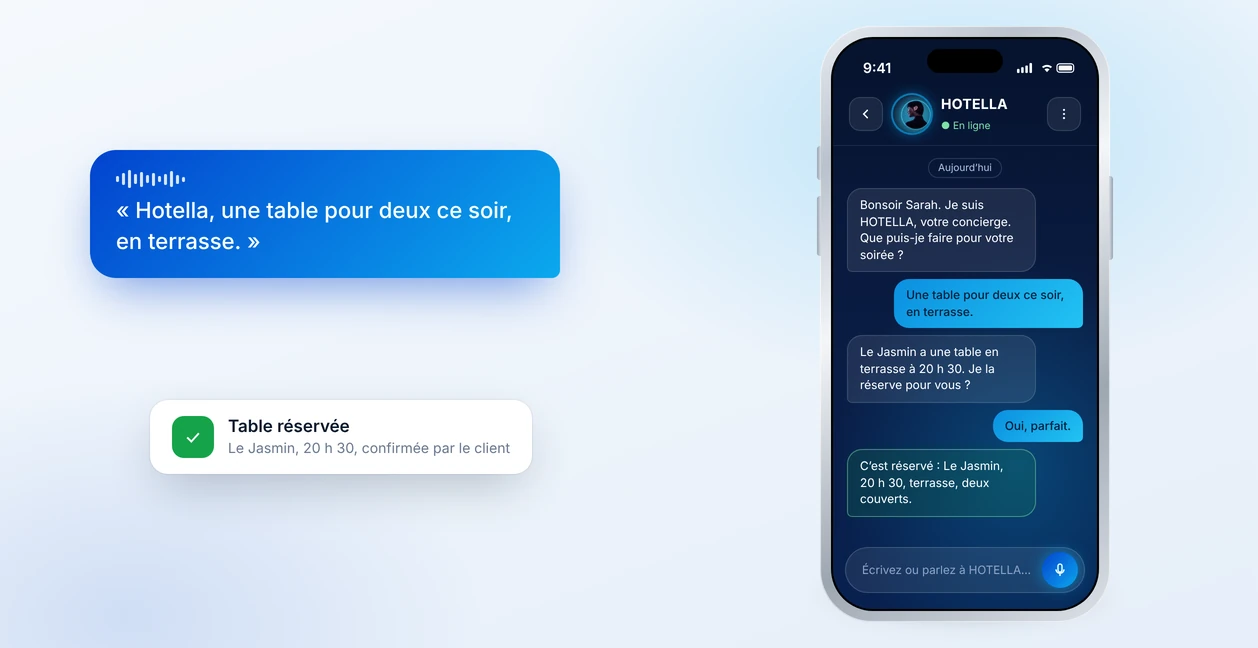
What voice really changes at the front desk
The front desk phone rings for towels, a Wi-Fi code, breakfast times. Voice does not replace your team: it gives them time back.
Products
The HOTELLA team, November 2, 2026, 4 min read
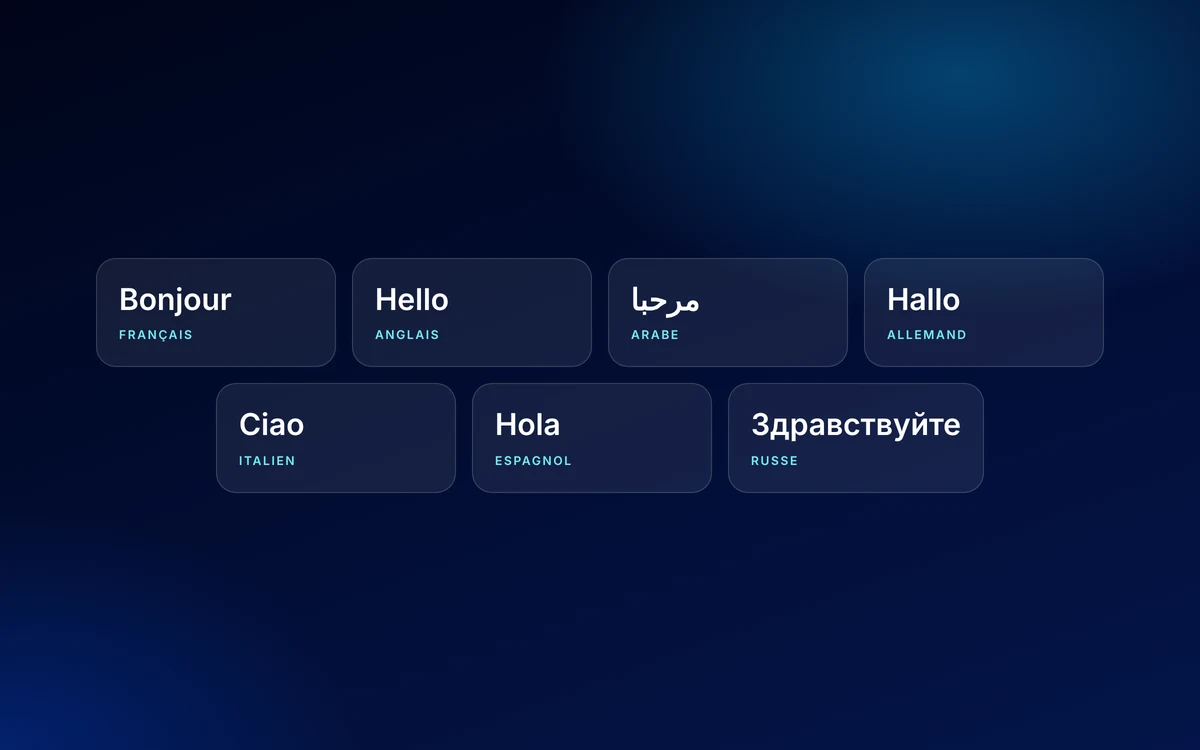
French, English, Arabic, German, Italian, Russian, Spanish: guests express themselves in their own language, and your team receives the request in theirs.
It is 6:15 am. An Italian guest comes down to the front desk to order a taxi for 6:30 am. The night auditor speaks French, Arabic and enough English to get by; the guest speaks Italian and a few words of English. They eventually understand each other through gestures and a scribbled address, but the scene has cost everyone ten minutes.
Your teams already make remarkable efforts to speak your guests’ languages. Nobody, however, can cover seven languages at every hour of the day and night.
The challenge grows at night and at weekends, when the team is smaller. The colleague who speaks Russian is on leave, the one who speaks German works mornings, and the night auditor is left alone with a guest they barely understand.
HOTELLA welcomes your guests in French, English, Arabic, German, Italian, Russian and Spanish. All seven languages are available from the PRESENCE plan onwards, for the app as well as for the written assistant.
The guest has nothing to set up. The app opens in their language, and the assistant replies in whichever language they use. Our Italian guest could have ordered his taxi in Italian, from his room, without coming downstairs or searching for words.
This is the other half of the problem, and the one most often overlooked. A request written in Russian is of no use if maintenance cannot read it. With HOTELLA, the request reaches your team in their working language, with the room number and the time.
The technician reads “air conditioning faulty, room 312”, not a sentence he has to get translated. The chef receives the order in the language of the kitchen, whatever language the guest used. Nobody wastes time guessing.
A request that is well understood is also a request that is well served. The kitchen does not send black tea when the guest wanted a herbal infusion, and housekeeping does not bring a pillow when a blanket was requested.
The front desk, meanwhile, finds all the day’s requests in Hotella Pilot, every one of them readable. There is no longer any need to track down the colleague who speaks German to understand what room 108 wanted.
Being welcomed in your own language changes the way you experience a stay. Guests feel free to ask, free to mention a problem, and they discover more easily what the hotel has to offer.
For a Tunisian hotel welcoming German families in summer, French-speaking business travellers all year round and guests from across the region, this is a question of service quality far more than of technology. Your teams work in their language, and your guests feel understood in theirs. Talk to your hotel, in the language of your choice.
The most convincing test is to try it in your own language, then in your guests’ languages. One demonstration is enough to see a request travel from Italian to French without anyone having to translate.
The front desk phone rings for towels, a Wi-Fi code, breakfast times. Voice does not replace your team: it gives them time back.
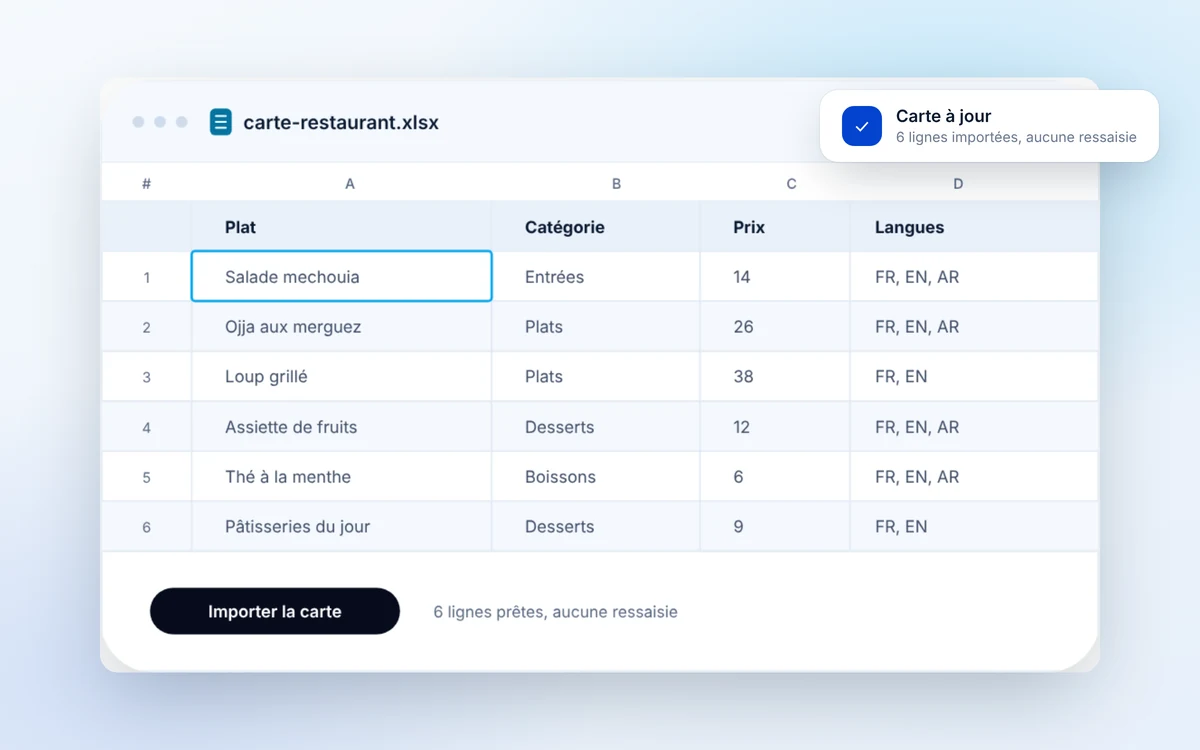
Going live should not tie up your team for weeks. With three well-prepared files, your hotel is online three days after you hand them over.
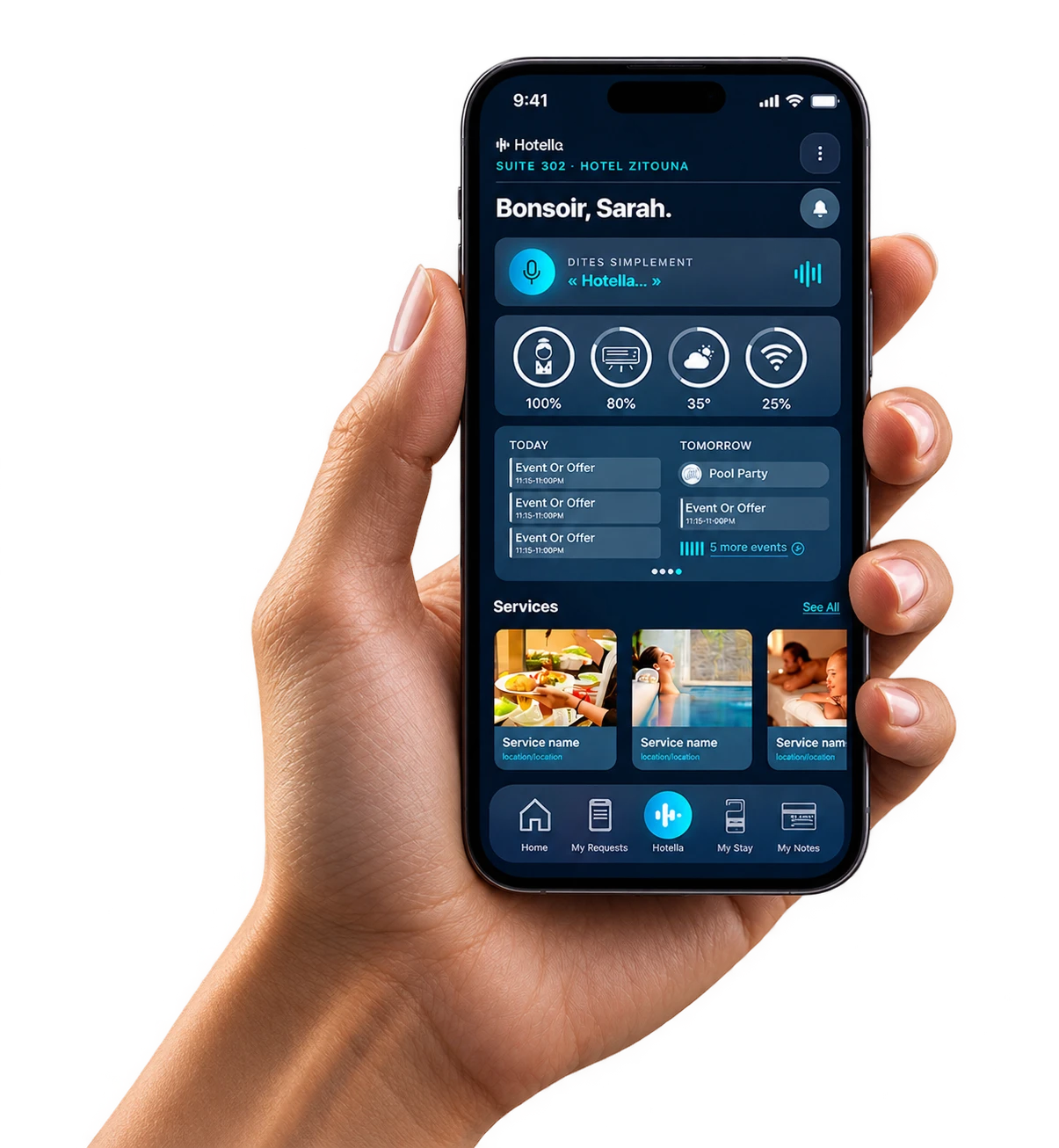
An app nobody installs serves no purpose. A QR code in the room removes the obstacle: nothing to download, no account to create, and the welcome screen opens in the guest’s own language.
A live demo on a complete property, in your colours.
Answer within one business day, demo tailored to your hotel